TIMELINEs
save the dates
mail 6-12 months
before your wedding date
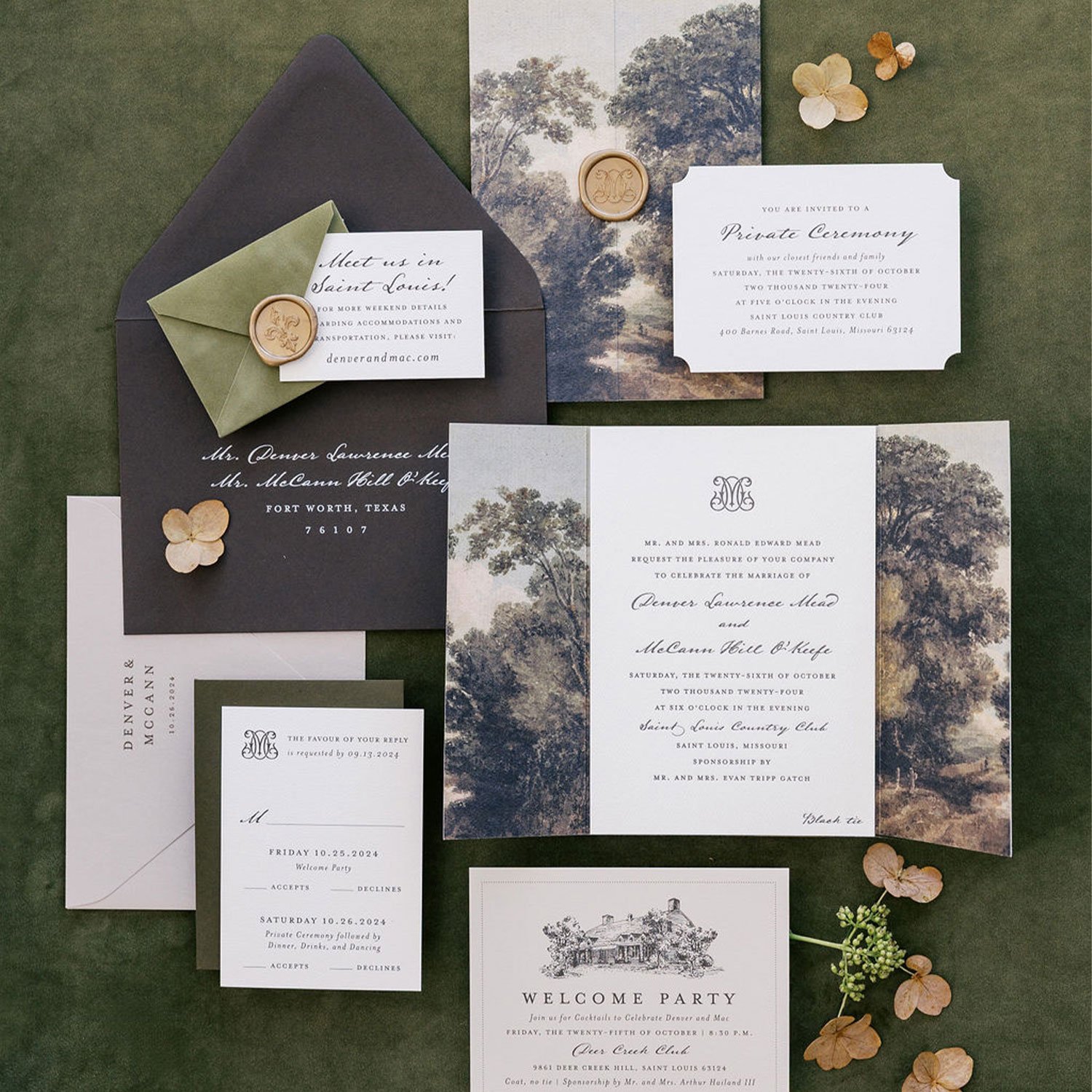
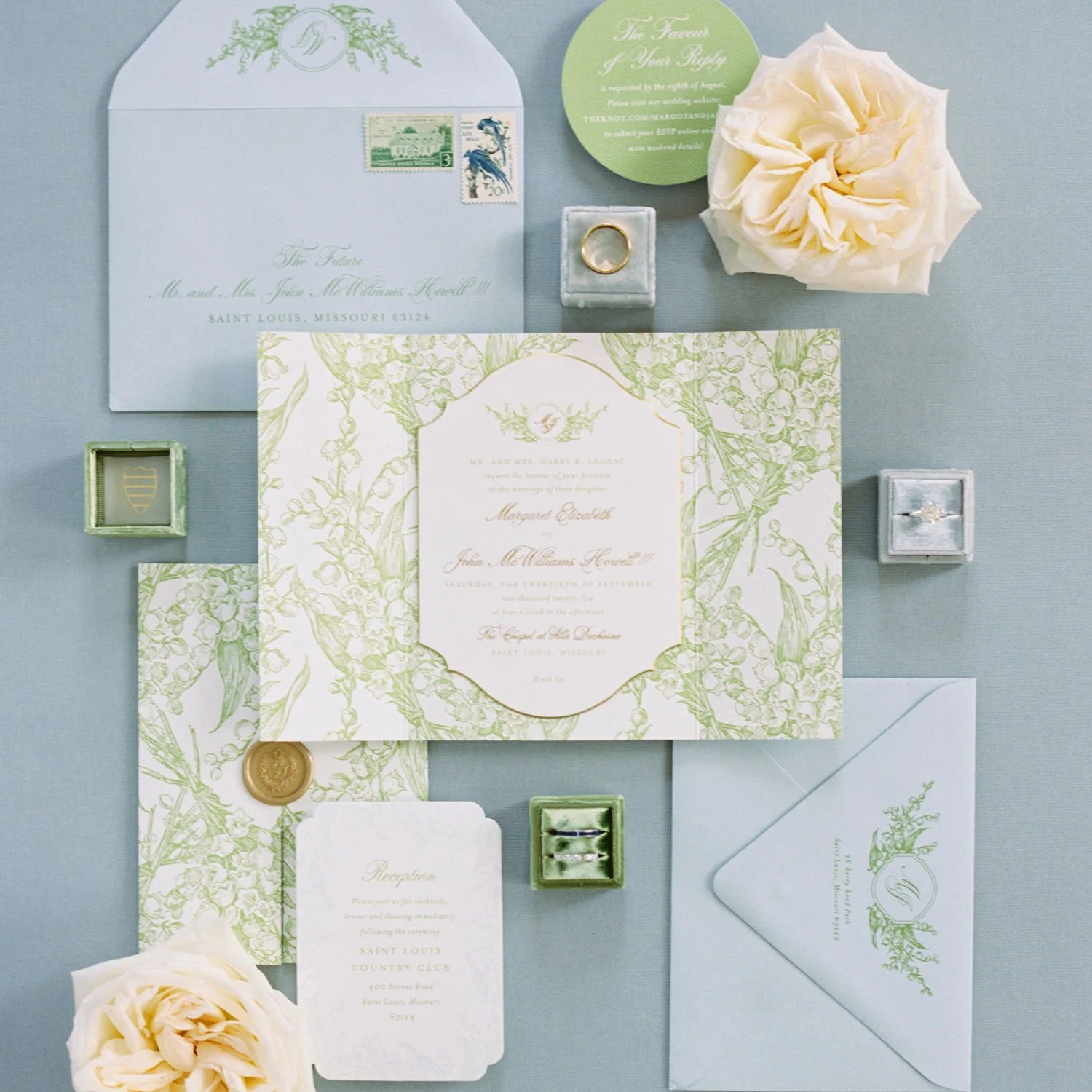
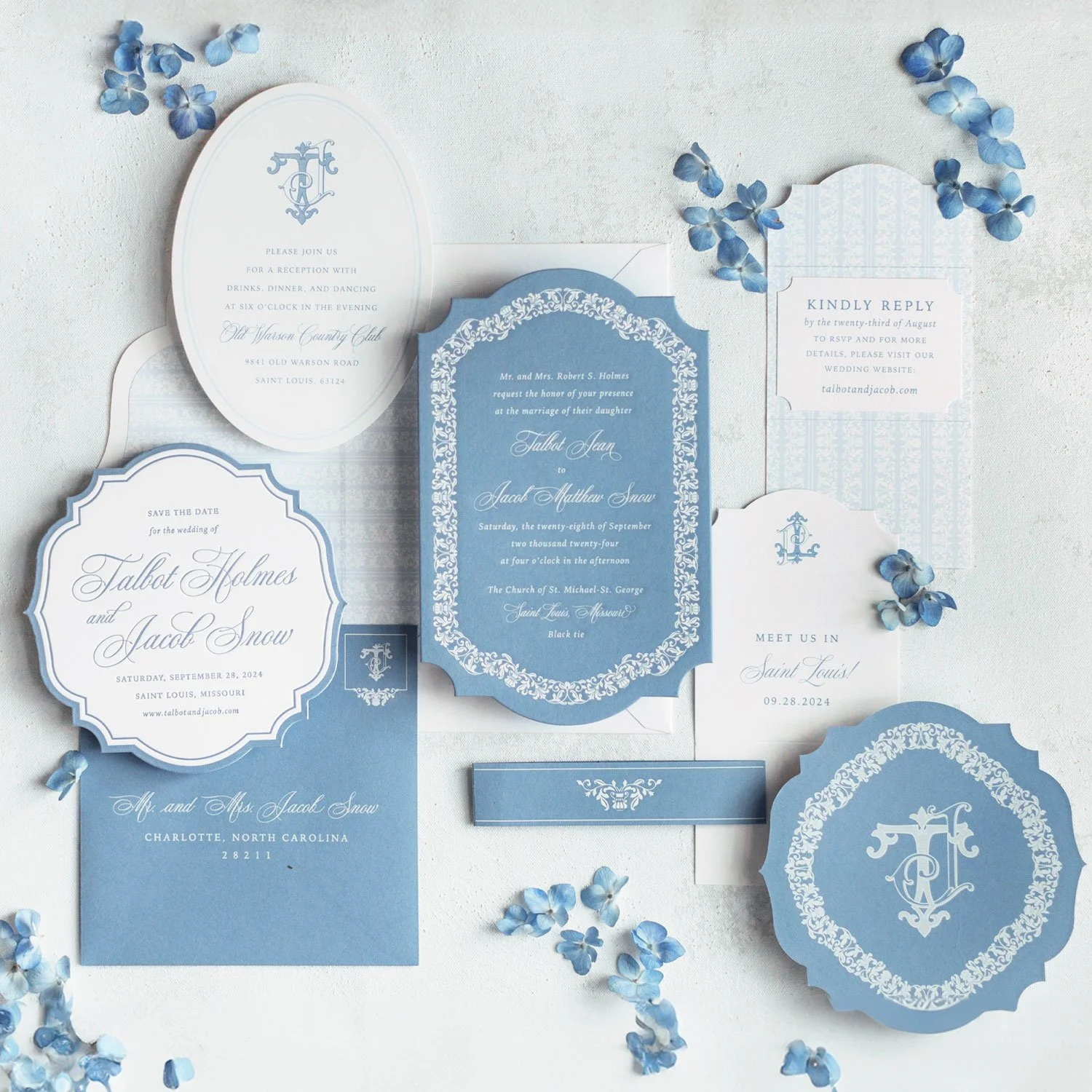
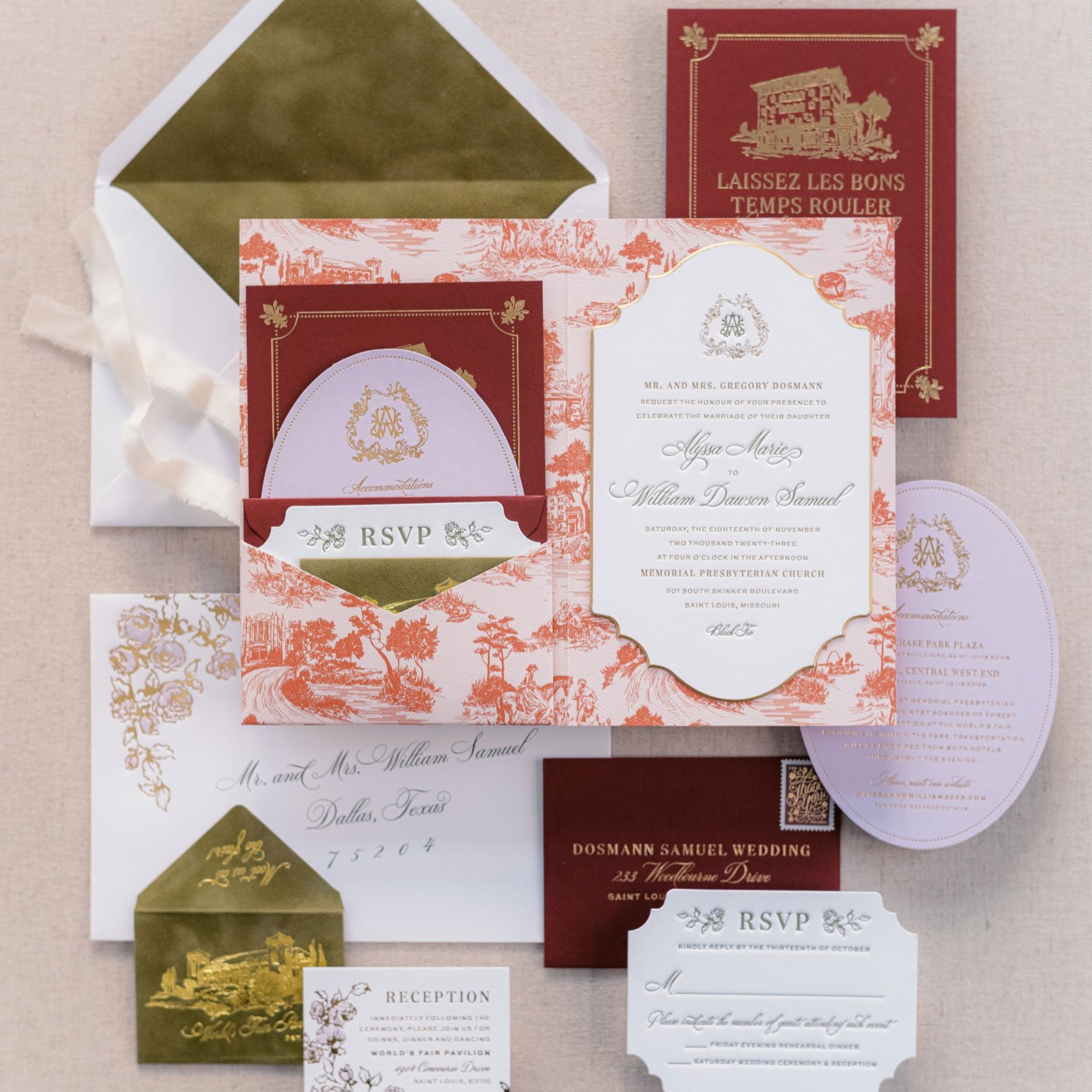
The short answer is that Save the Dates should be mailed 6-12 months prior to the wedding day, but a variety of factors can influence this decision. Wedding location, guest accommodations, and the targeted attendance size should all be considered when choosing what is best for you. While they are not traditionally necessary, Save the Dates have become quite customary in recent years.
wedding suite
mail about 12 weeks
before your wedding date
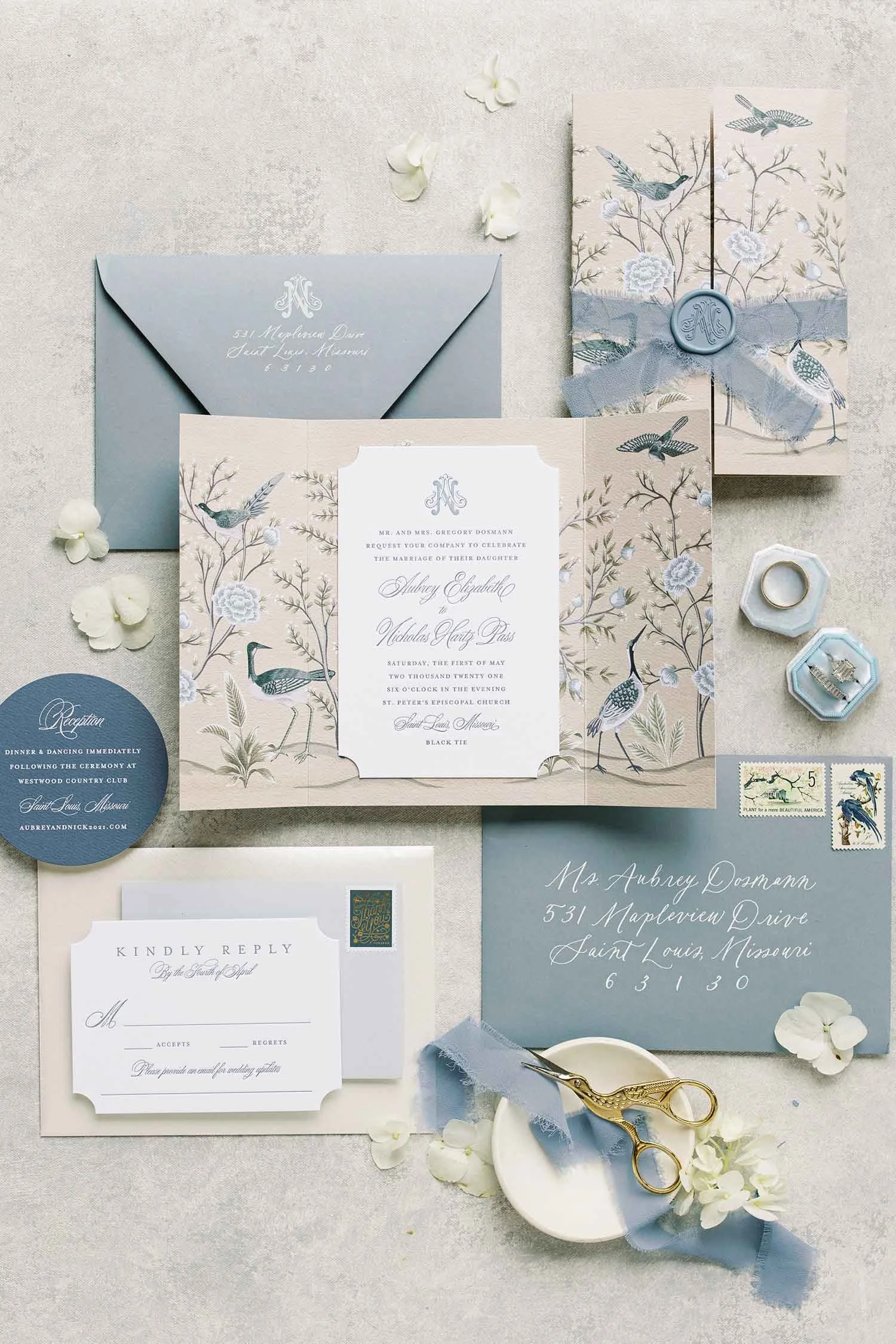
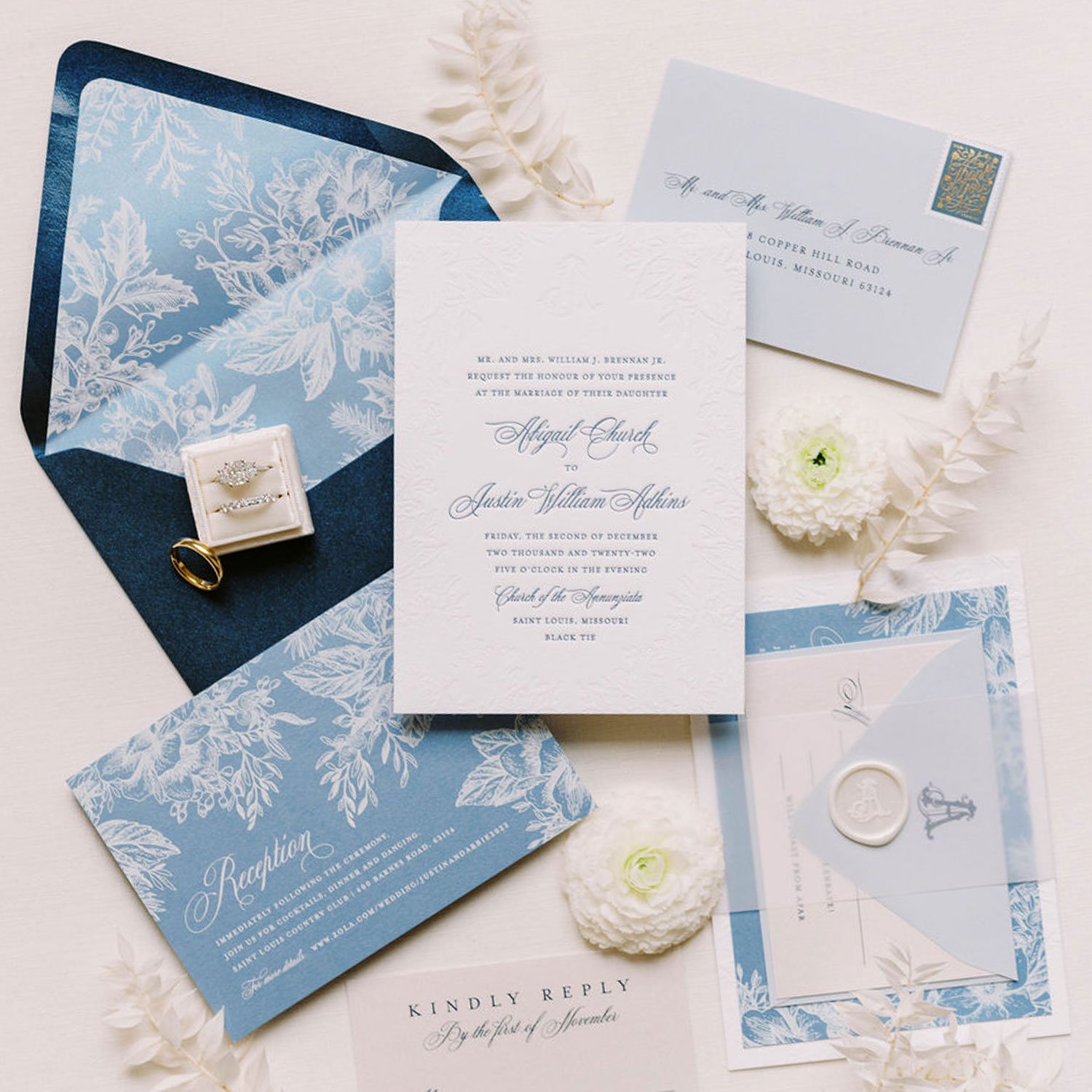
I recommend aiming to mail the Wedding Suite about 12 weeks prior to the wedding day. That leaves about six weeks for guest to receive the invitation and mail their response back within a typical reply timeline.
rsvp reply request
request six weeks
before your wedding date
The consensus for the RSVP reply date hovers around six weeks prior to the wedding day. This allows for some time to track down any outstanding replies. Keep in mind venue or catering vendors may require a more specific timeline for a final headcount.
day-of-items
about 12 weeks
before your wedding date
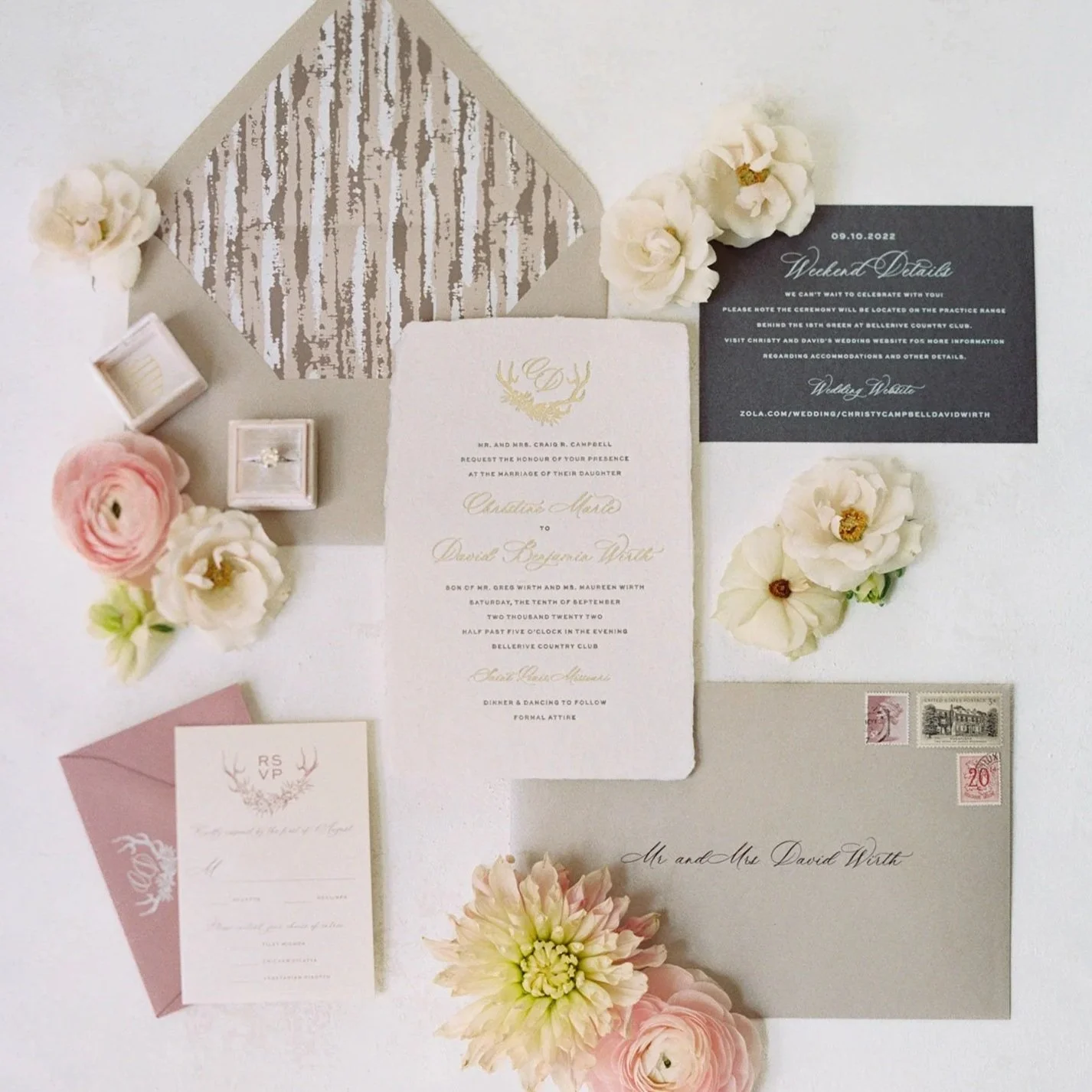
Typically the first priority will be focusing on the Wedding Suite rather than day-of details. Once they are in the mail, attention fully shifts to day-of items. Wedding day materials can include ceremony programs, a seating chart, escort cards and/or place cards, table numbers, dinner menus, bar signage, cocktail napkins, and more. It really is a personal part of the planning process to decide what extra details will be included.
THE ULTIMATE
GUEST LIST TEMPLATE
necessary guest information and more
-
Proper titles and names and for every household with corresponding mailing addresses are necessary for printing or hand-calligraphy on any mailing envelope.
Traditionally, outer and inner envelopes are included in a wedding suite. They provide additional protection during the mailing process and bring additional etiquette guidelines in regards to recipient formatting. However, it is not unheard of to forgo an outer and inner envelope combination and just have a single mailing envelope. The template includes two tab sheets depending on your envelope decision.
Here are a few general examples following traditional formal etiquette.
Married Couple
”Mr. and Mrs. John Kelly”Married, with Maiden Name
”Mr. John Kelly and Mrs. Jane Johnson”Unmarried Couple
”Mr. John Kelly
Ms. Jane Johnson”“and” is typically reserved for married couples. If they are unmarried listing each name on it’s own line is advised.
Married, both Doctors
”The Doctors Kelly”
”Doctors Jane and John Kelly”
”Doctor John Kelly and Doctor Jane Kelly”Married, both Doctors with Maiden Name
”Doctor John Kelly and Doctor Jane Johnson”Married, Women Outranks Husband
”Doctor Jane Kelly and Mr. John Kelly”Boys over 16
“Mr.”Girls under 18
“Miss”Widowed Women
“Mrs. John Kelly” per traditional etiquette, but it is always advised to consider the woman’s preferenceWhen Using Outer AND Inner Envelopes
Use Full Names and Titles on the Outer Envelope, Use Only Titles and Last Names on the Inner Envelope
Outer: “Mr. and Mrs. John Kelly”
Inner: “Mr. and Mrs. Kelly”
Only Designate Plus One Invitation on the Inner Envelope
Outer: “Ms. Mia Jones”
Inner: “Ms. Jones and Guest”
Only Designate Invited Children on the Inner Envelope
Outer: “Mr. and Mrs. Greg Smith” or “The Smith Family”
Inner: “Mr. and Mrs. Smith, Alex and William” -
Mailing addresses are necessary for printing or hand-calligraphy on any mailing envelope. In the template, the “street address”, “city, state”, and “ZIP code” are intentionally separated. Addresses will appear exactly as they are typed in. The more formal etiquette is not to use abbreviations in the mailing address portion, only use abbreviations in names and titles.
Be conscious of inconsistencies such as,
“1234 Main Street” vs. ”1234 Main St.”
“Apartment 8” vs. ”Apt 8”
“Saint Louis, Missouri” vs. ”St. Louis, MO”
-
The first and last name of EVERY guest is immediately relevant when creating a place card at each seat for every guest, whereas escort envelopes can include more than one person by defaulting to the designated household name.
For example, you may already have “Mr. and Mrs. John Thompson,” in the first household category, but it may be necessary to have “Mr. John Thompson” AND “Mrs. Jane Thompson” clearly noted as well.
-
A savvy shortcut in this template is to designate a primary last name for each household and have the list alphabetically sorted by this category. This avoids confusion with unfamiliar names due to recent maiden name changes, divorce, or any guests with unrecognizable proper names.
For example, three adult sisters from the Jones family are invited, but only one sister is married and now listed under the household name with her husband as “Mr. and Mrs. James Louis”. Designating her primary last name as “Jones” ensures that she will be organized on the list next to the rest of the invited Jones members, despite different household last names.
COMMUNICATION etiquette
I personally lean towards traditional
guidelines for weddings and events,
see all things Emily Post.
However, with the ever-evolving event industry, staying up-to-date with current trends and alternative options is invaluable. I hope to inform and guide you in the decision-making process because ultimately, it is YOUR big day.